During one of our recent World of CX virtual breakfasts, we had the opportunity to learn from Mandisa, a seasoned CX leader who reminded us that strategy without humility, curiosity, and alignment is just noise.
Her reflections were a powerful call to approach Customer Experience not as a silo, but as a connector, a translator, and a business driver. Whether you’re leading CX, influencing change from within, or building your business with service at the core, these lessons are a reminder that meaningful impact starts with understanding people, context, and strategy.
Here are 10 takeaways from her session that truly stood out:
- Transitioning from operations to strategic leadership requires openness to coaching, mentorship, and personal development. Great leaders don’t pretend to know it all; they invest in their growth and allow themselves to be guided.
- CX is not the center of the universe; it thrives when it collaborates with other business functions. Respecting and aligning with broader business goals makes CX relevant and impactful.
- Instead of pushing CX onto businesses, immerse yourself in their world. Understand what keeps leaders up at night, then co-create solutions that support their objectives.
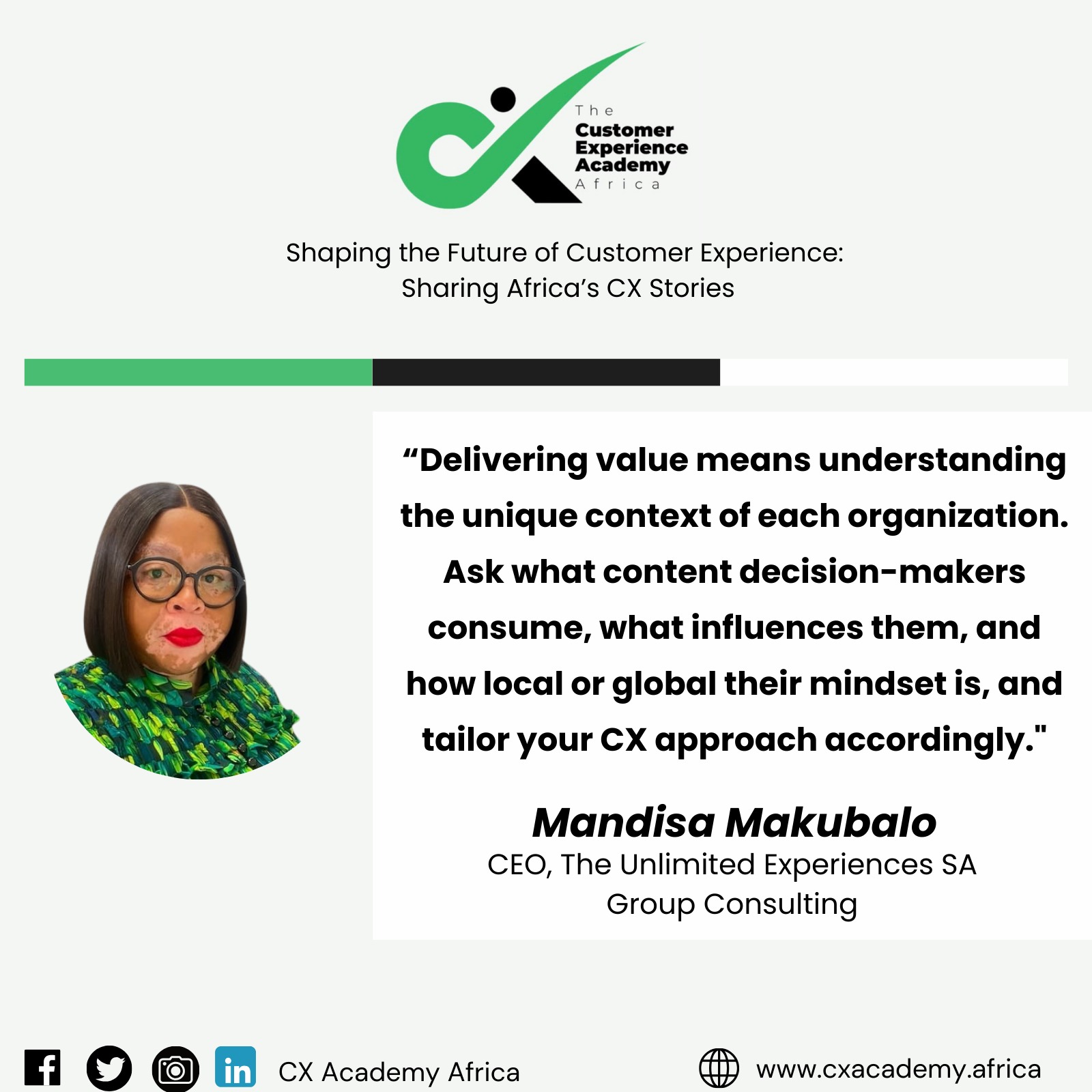
- Delivering value means understanding the unique context of each organization. Ask what content decision-makers consume, what influences them, and how local or global their mindset is, and tailor your CX approach accordingly.
- Executives don’t care about CX jargon. They want results. Tie CX initiatives to hard business metrics, market share growth, financial performance, or cost reduction, to gain credibility and buy-in.
- Passion is great, but to be taken seriously, especially in a corporate environment, you need data-backed, stakeholder-informed business cases. Learn to speak the language of the boardroom.
- After conferences and trainings, avoid overwhelming yourself or the business with sweeping changes. Pick one broken process, fix it, and let that success tell the story.
- Africa needs serious minds solving serious problems. Time is precious, and we owe it to future generations to work purposefully, challenge policy, and reshape systems.
- CX leaders must act as bridges between departments, helping others achieve their deliverables. When you understand others’ accountabilities, you become an asset, not a silo.
- Formal qualifications help, but those who endure in CX are the ones who embrace continuous learning. The CX landscape is ever-evolving, and only agile, open minds will keep up and lead.