In reality, Customer Experience is the business itself, we are in the business of serving customers.
During our recent “Elevating Experiences in 2026” virtual breakfast conversation with the CX Academy Africa Faculty, we explored how organizations can prepare for the future of CX while staying relevant in African contexts. The discussion highlighted the importance of employee experience, frontline empowerment, strategic involvement, and linking CX to real business outcomes.
Drawing from the conversation, here are 10 lessons that CX professionals and organizations can use to guide their work in 2026 and deliver experiences that truly make a difference for customers, employees, and the business.
🌟 Customer experience starts with employee experience. What happens internally reflects externally. If employees are unsupported or disengaged, it will show in the customer experience. Every person has a role to play in creating a positive experience.
🌟 Customer experience is a team sport. You don’t win alone. Shared ownership across roles, locations, and levels ensures consistent, high-quality experiences for customers.
🌟 Leaders need to recognize that employee experience drives CX. This means removing barriers that prevent teams from delivering great experiences, empowering frontline staff, and fostering leadership behaviors that support problem-solving.
🌟 CX professionals must be part of strategy conversations, not just implementation. Being involved early allows them to influence decisions and ensure customer and employee experience are embedded in organizational goals.
🌟 Strategies must move from paper to practice. Plans that sit in drawers or exist only for compliance have no impact. Real change happens when strategies are actively lived and measured across teams.
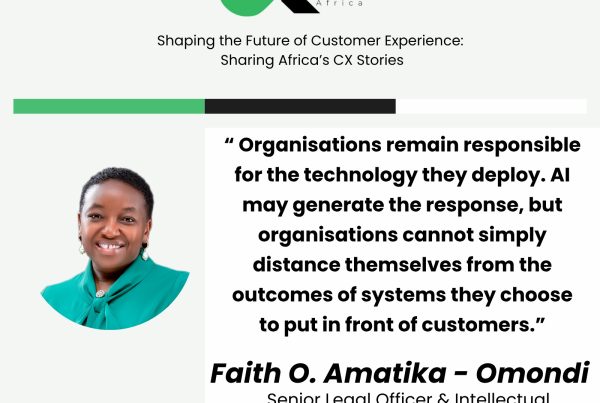
🌟 Technology, including AI, should enhance human interactions, not replace them. Automation can improve speed and efficiency, but empathy and personalization remain critical differentiators.
🌟 Understanding the local context is essential. In Africa, mobile-first experiences, data costs, and inclusivity must shape how organizations design journeys to meet real customer needs.
🌟Customer experience is the business. Every CX professional plays a direct role in shaping where the organisation is going, because customers are the lifeblood of the business.
🌟 Frontline empowerment matters. Reducing bureaucracy, improving tools and training, and enabling staff to take ownership of outcomes leads to more consistent and meaningful experiences.
🌟 CX is about intentionality and adaptability. Organizations must continuously reflect on past learnings, emerging trends, and customer feedback to deliver purposeful experiences that evolve with changing expectations.