Customer Service Week should be more than a celebration. It can be an opportunity to create meaningful experiences, solve real customer problems and build changes that continue long after the week is over.
During this week’s CX Academy Virtual Breakfast Conversation, Paul Kitemu, Dr. Lucy Kiruthu and Duncan Juma reflected on Paul’s achievement of the CCXP global accreditation before opening a broader conversation on how organisations can make Customer Service Week 2026 more meaningful under the theme “The Extra Mile.”
The discussion challenged organisations to move beyond the usual cake-cutting, gifts, games and social media posts and instead focus on purpose, customer value, employee recognition and sustainable change.
Here are 10 lessons from the conversation:
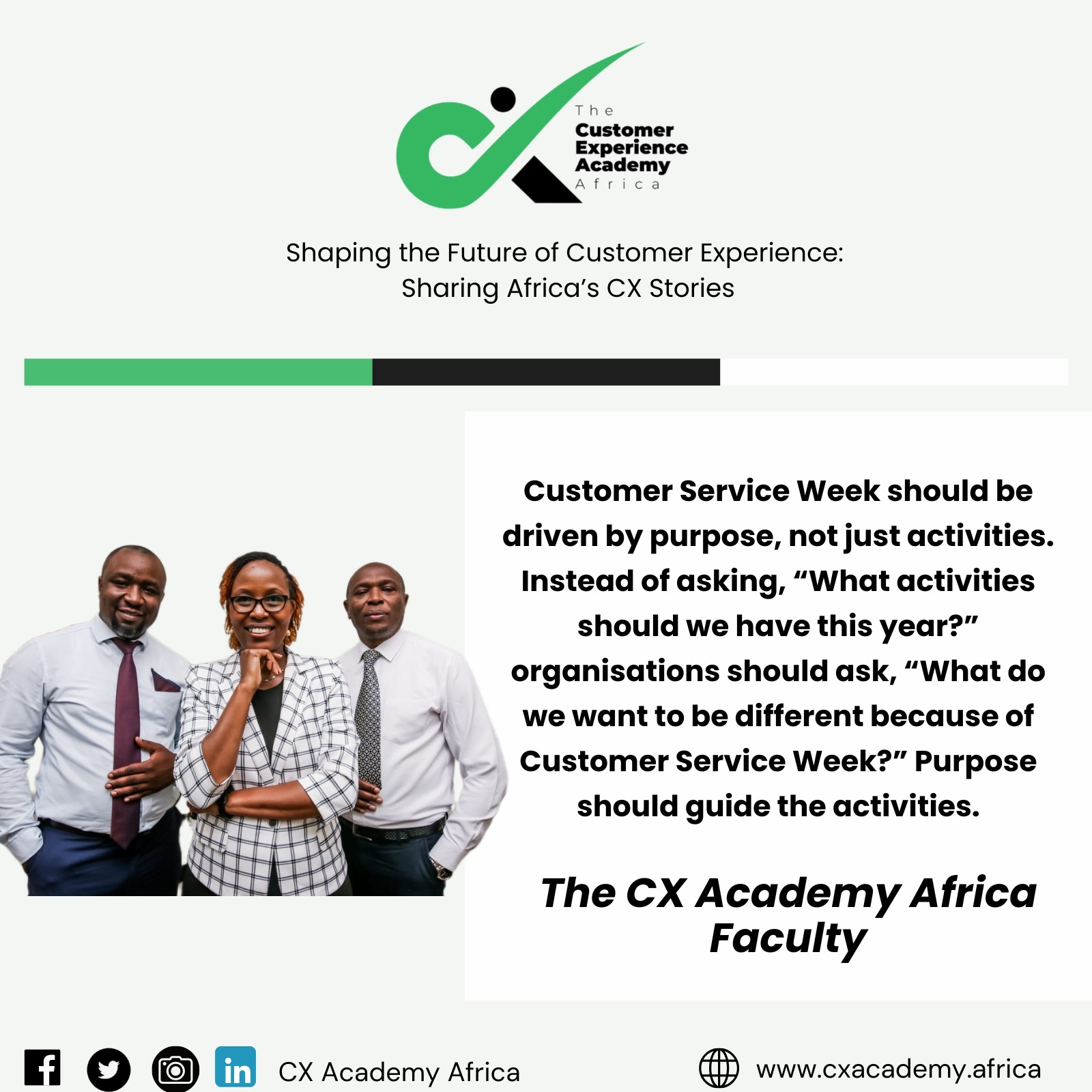
🌟 Customer Service Week should be driven by purpose, not just activities. Instead of asking, “What activities should we have this year?” organisations should ask, “What do we want to be different because of Customer Service Week?” Purpose should guide the activities.
🌟 Measure what becomes different. The success of Customer Service Week should not only be measured by attendance, participation or the number of activities completed. Look at what was learned, improved, changed or started as a result of the week.
🌟 Use the week to solve a real customer pain point. Customer Service Week can be an opportunity to identify one important customer problem and bring teams together to understand and redesign the experience around it.
🌟 Close the feedback loop with customers. Customers often provide valuable feedback through NPS, CES, surveys and complaints, but they may never know what happened afterwards. Showing customers what was done with their feedback demonstrates that their voice matters.
🌟 Recognise people for the difference they make. Generic rewards where everyone receives the same thing may not create the same impact as personally recognising employees for specific contributions. People want to know that what they do genuinely matters.
🌟 Customer experience is everyone’s responsibility. Customer Service Week should not only celebrate frontline teams. IT, Finance, HR, Operations and other back-office functions also influence the customer journey and should understand how their work affects customers.
🌟 Bring employees closer to the real customer experience. Back-office teams and leaders can go the extra mile by listening to customer calls, interacting with customers, spending time with frontline teams or experiencing customer journeys themselves. This can turn customer issues from numbers in a report into real human experiences.
🌟 Involve employees in creating Customer Service Week. Asking employees what they would like to see during the week creates ownership. Their ideas can also reveal customer frustrations and opportunities that may not be visible to the planning team.
🌟 Turn Customer Service Week into a platform for action. Competitions, quizzes and other activities can be redesigned around solving real customer problems. The week can also be used to launch meaningful initiatives, rather than simply marking the occasion.
🌟 Make the impact last beyond the week. Customer Service Week should be a starting point for sustainable change. A 90-day CX action plan, new improvement initiatives or specific customer commitments can ensure that the energy of the week continues throughout the other 51 weeks of the year.