Customer trust is built long before a complaint is raised or a service is delivered. It begins with how organisations collect, use, and protect personal information.
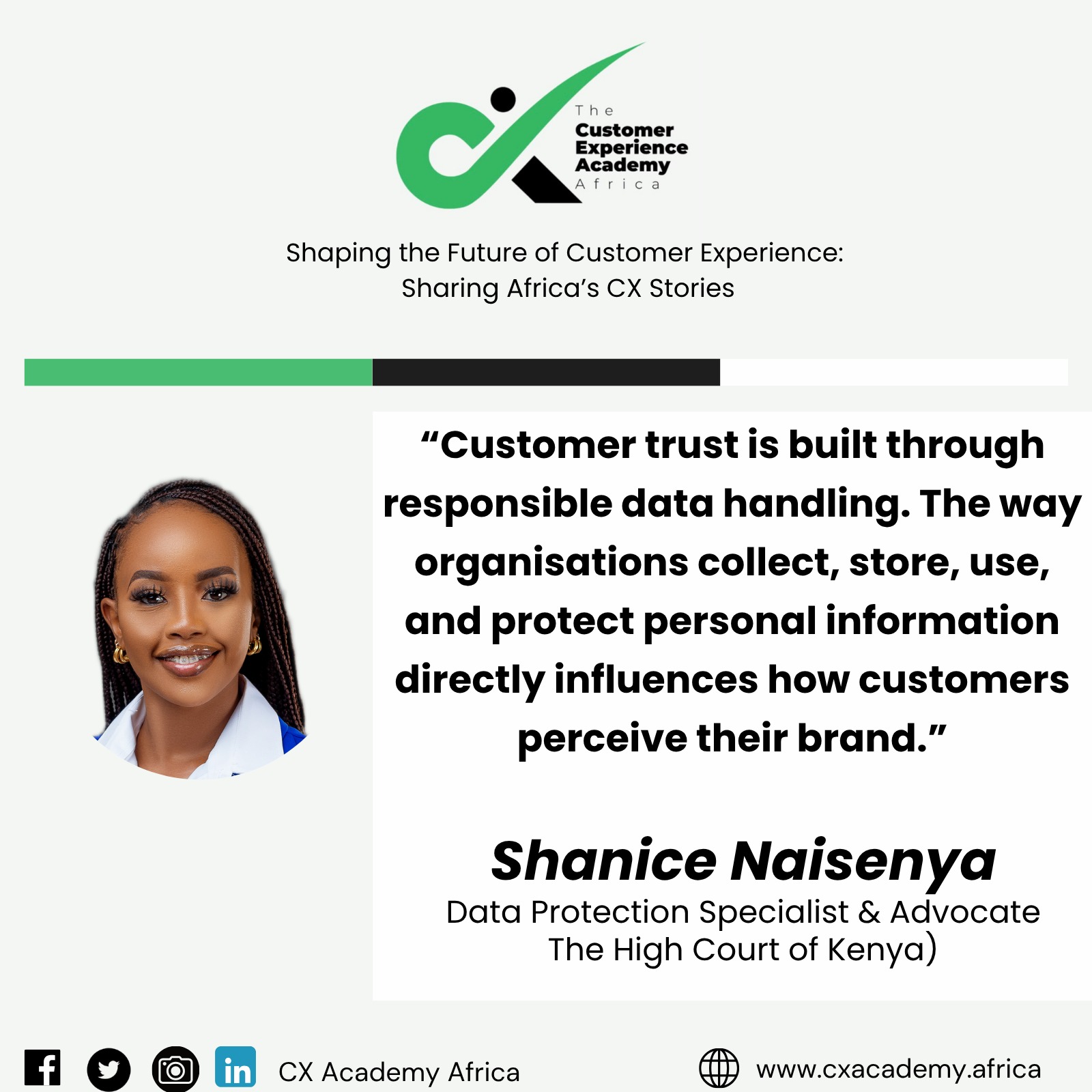
During this week’s World of CX Breakfast Conversation, Shanice Naisenya, Advocate of the High Court of Kenya and Data Protection & Privacy Expert, unpacked the growing importance of data protection in today’s customer experience landscape. Through practical examples and real-world cases, she highlighted how responsible data practices help organisations build trust, strengthen customer relationships, and create experiences people can confidently engage with.
Here are 10 lessons from the conversation:
- 🌟 Privacy is a fundamental customer right. Customers deserve to know why their personal information is being collected, how it will be used, and who will have access to it.
- 🌟 Collect only the information you genuinely need. Every piece of customer data should have a clear purpose. Unnecessary data collection increases risk and weakens trust.
- 🌟 Transparency builds confidence. Clear privacy notices and open communication help customers understand how their information is handled and strengthen their trust in your organisation.
- 🌟 Consent should be informed and specific. Customers should understand exactly what they are agreeing to, especially when their information will be used beyond the primary service they requested.
- 🌟 Using data for a different purpose without permission erodes trust. Information collected for one reason should not be repurposed without the customer’s knowledge and appropriate legal basis.
- 🌟 Data protection is everyone’s responsibility. Protecting customer information is not only the responsibility of legal or compliance teams. Every employee involved in collecting, processing, or using customer data plays a role.
- 🌟 Customer trust is built through responsible data handling. The way organisations collect, store, share, and protect personal information directly influences how customers perceive their brand.
- 🌟 Customers should be empowered to exercise their rights. Organisations should make it easy for customers to ask questions, update their information, withdraw consent where applicable, or request deletion of their personal data.
- 🌟 Sensitive personal data requires greater protection. Information such as biometrics, facial recognition, and fingerprints requires stronger safeguards because it cannot easily be replaced if compromised.
- 🌟 Good customer experience starts with trust by design. Before introducing new products, services, or processes, organisations should consider what customer data is needed, why it is needed, and how it will be protected throughout its lifecycle.