Employee experience is not defined by what organizations write in policies, values, or handbooks. It is defined by what people live through every day at work. It is shaped in the small moments, how leaders respond, how decisions are made, how feedback is handled, and how people feel treated in practice.
Stephen’s perspective is drawn from years of working across engineering, aviation, telecom, HR, and learning and development, where he observed a consistent pattern: organizations often have good intentions, but struggle to translate those intentions into lived employee experience.
Even within the same organization, with the same systems and policies, employee experiences can look completely different. The difference is almost always leadership behavior and how intent is converted into action.
As Stephen highlights, employee experience is not a project or a department—it is a daily reality shaped by leadership capability, emotional intelligence, and organizational consistency.
Here are 10 lessons drawn from his perspective:
🌟 Growth is rarely linear; it often begins in unexpected places and is shaped by exposure, transition, and willingness to adapt across different roles and industries.
🌟 Career paths evolve through experience, and what you study does not always define where you end up or the kind of impact you ultimately make.
🌟 Much of what defines employee experience comes from real workplace contradictions, especially the gap between what organizations say about people and what they actually do.
🌟 Organizations may call people their greatest asset, but the reality of employee experience depends on how intentionally they are managed, developed, and supported.
🌟 Technical expertise alone is not enough for leadership; many challenges arise when individuals are promoted into leadership roles without being prepared to manage people.
🌟 Culture is not created in policy documents but in daily leadership behavior, because employees mirror what they consistently see from those in authority.
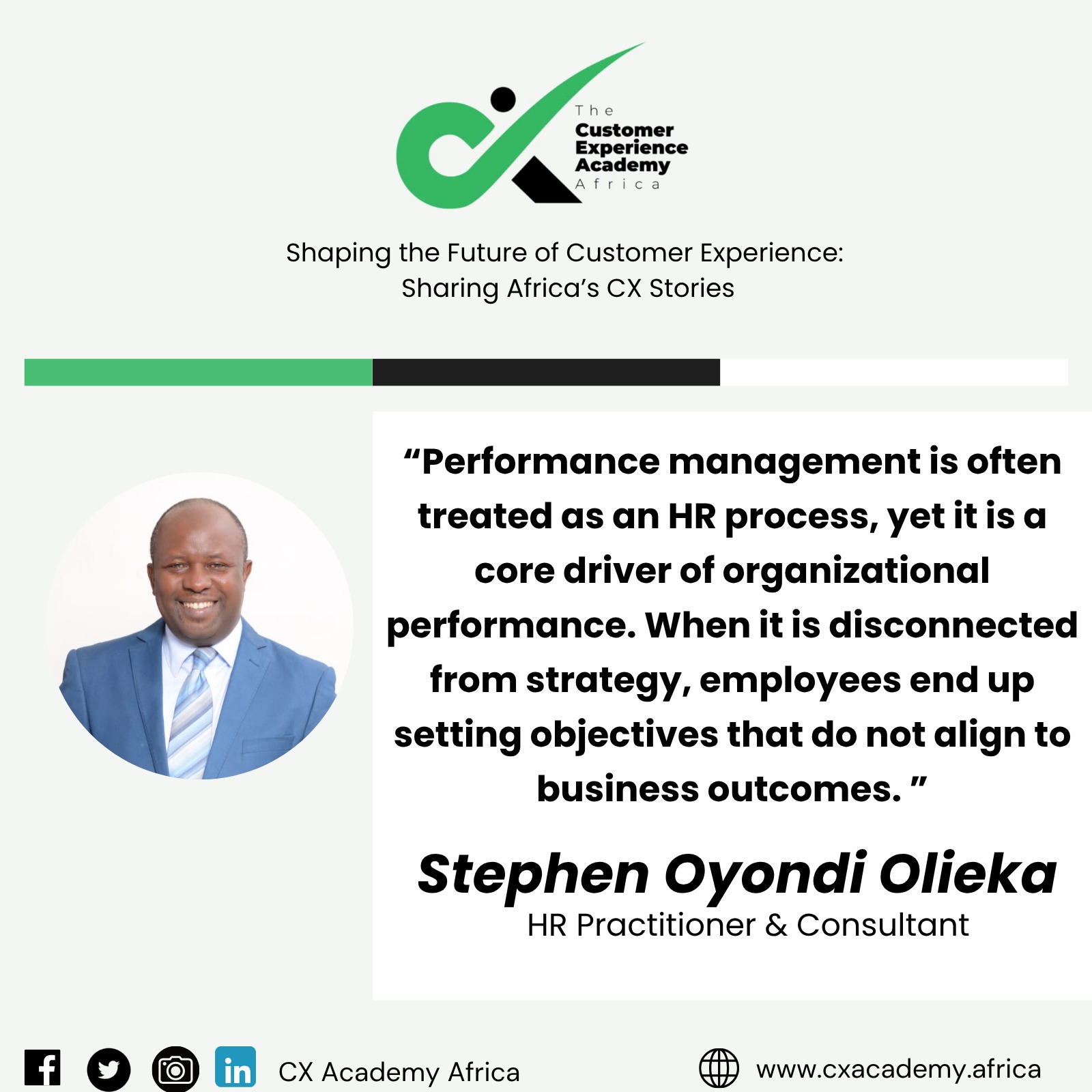
🌟 Performance management is often treated as an HR process, yet it is a core driver of organizational performance. When it is disconnected from strategy, employees end up setting objectives that do not align to business outcomes.
🌟 The gap between what is promised during recruitment and what employees experience after joining is one of the biggest drivers of disengagement and mistrust.
🌟 Feedback and engagement mechanisms lose value when organizations listen but do not act, because employees stop participating when their voice does not lead to change.
🌟 Emotional intelligence is at the core of effective leadership, shaping how leaders behave, how teams function, and ultimately how organizational results are achieved.