How can organisations move beyond promises and create experiences that customers and citizens can genuinely rely on?
In this week’s World of CX Weekly Breakfast Virtual Conversation, we had an insightful discussion with Professor Robert Ebo Hinson on Customer Experience and Citizen Experience.
The conversation explored the role of leadership, the importance of putting customers and citizens at the centre of value creation, and why better experiences require more than good intentions.
Here are 10 lessons from the conversation:
🌟 Customer experience goes beyond the customer service team. Every department contributes to the experience customers receive. Marketing, finance, HR, production and other functions must work together to meet customer needs.
🌟 Leadership must put the customer at the centre. CX practitioners need to influence senior leaders and help make customer needs a priority in organisational decisions.
🌟 An apology is not enough if the problem remains unresolved. Professor Hinson’s example of a customer who waited for a delivery, received a faulty product and struggled to get help showed how apologies cannot replace actual solutions.
🌟 Deliver on the promises made to customers. When an organisation promises delivery within 48 hours, the experience should reflect that commitment. The gap between what is promised and what is delivered can damage trust.
🌟 Customer experience is about creating and delivering value. Organisations need to understand what customers value, deliver it and continue meeting their needs over time.
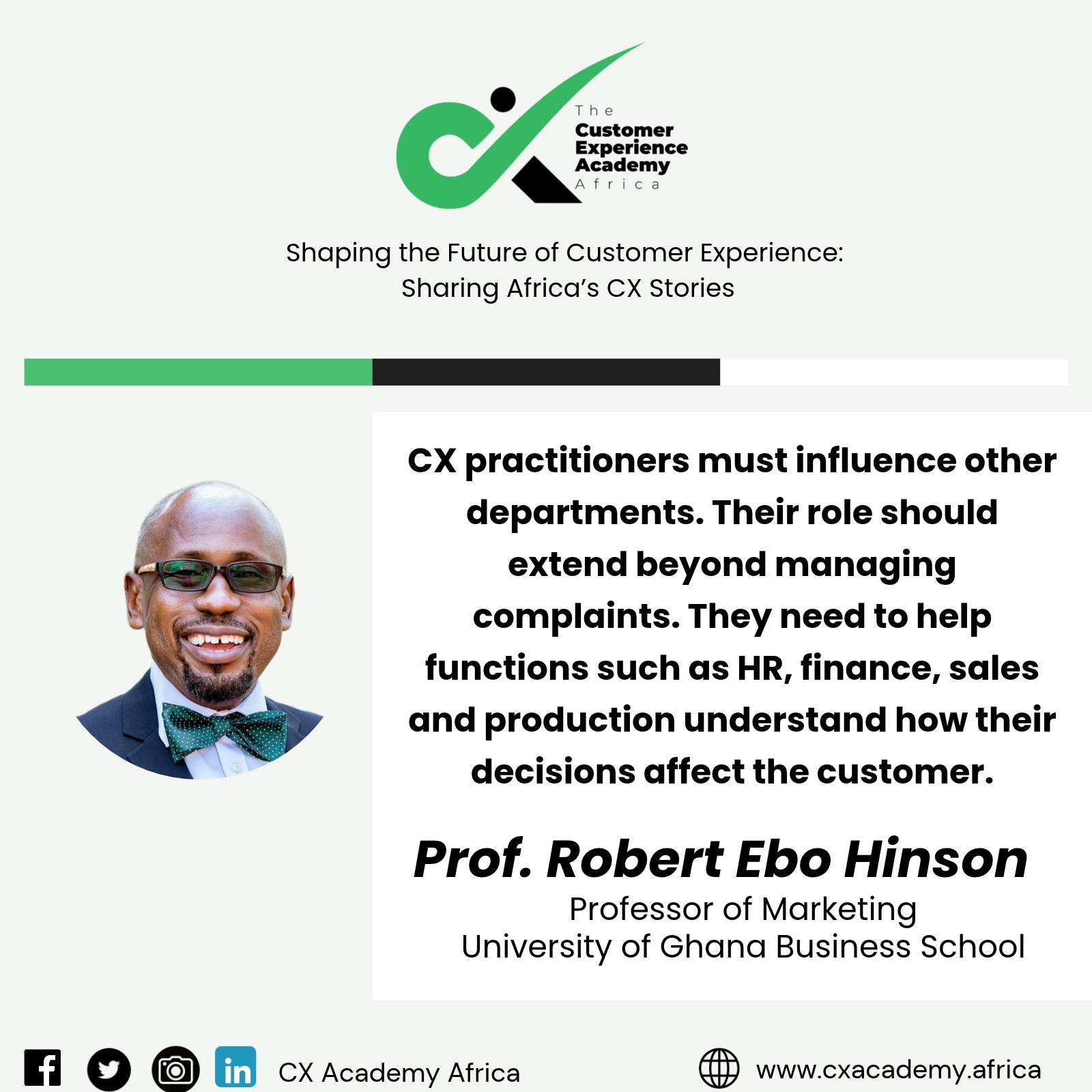
🌟 CX practitioners must influence other departments. Their role should extend beyond managing complaints. They need to help functions such as HR, finance, sales and production understand how their decisions affect the customer.
🌟 Citizen experience deserves greater attention. Public services also need to put people at the centre. As the conversation highlighted, citizens depend on public institutions for essential services and should be able to expect responsive, reliable service.
🌟 Service charters must translate into real action. Having standards on paper is not enough. Organisations need to measure performance, make results visible and hold leaders and teams accountable for service delivery.
🌟Leadership must reinforce the right behaviours. Organisations need the right systems to recognise excellent performance and hold teams accountable when service standards are not met.
🌟 Customer Service Week should lead to cultural change. Beyond T-shirts, promotional activities and celebrations, organisations should use the week to build a culture where going the extra mile becomes part of everyday practice.