Customer expectations continue to evolve, and organisations need to keep listening, learning and improving to deliver experiences that customers value.
During our World of CX Weekly Breakfast Virtual Conversation, we explored what matters most to customers and how organisations can respond to their needs more effectively.
From speed and convenience to trust, value and feeling appreciated, here are 10 lessons from the conversation.
🌟 Don’t assume you know what customers want. Listen to customers directly instead of making assumptions. Their feedback can help organisations understand what matters most and where improvements are needed.
🌟 Speed and convenience matter. Customers appreciate getting the help they need quickly and without unnecessary complications. Sometimes, a smooth interaction that takes less than two minutes can leave a lasting impression.
🌟 Customers want value for their money. Customers expect value in return for the business they give an organisation. When their expectations are repeatedly unmet, they may choose to take their business elsewhere.
🌟 Trust is a big part of customer experience. As organisations embrace digital services and AI, customers need transparency. They want to understand who or what they are interacting with and feel confident in the service they receive.
🌟 Protect customer information. Convenience should never come at the expense of privacy and security. Customers need to feel confident that their personal information is being handled responsibly.
🌟 Small details can create memorable experiences. A thank-you call, an update on an order, a delivery follow-up or asking permission before sending a feedback survey can make customers feel valued.
🌟 Make customers feel respected and appreciated. Every customer deserves to feel that their business matters, regardless of how much they spend or transact. Seeking assistance should never make a customer feel like a bother.
🌟 Recognise that customers have different expectations. Some customers prioritise speed, while others value warmth, clear communication and a personal connection. Understanding these differences helps organisations create more relevant experiences.
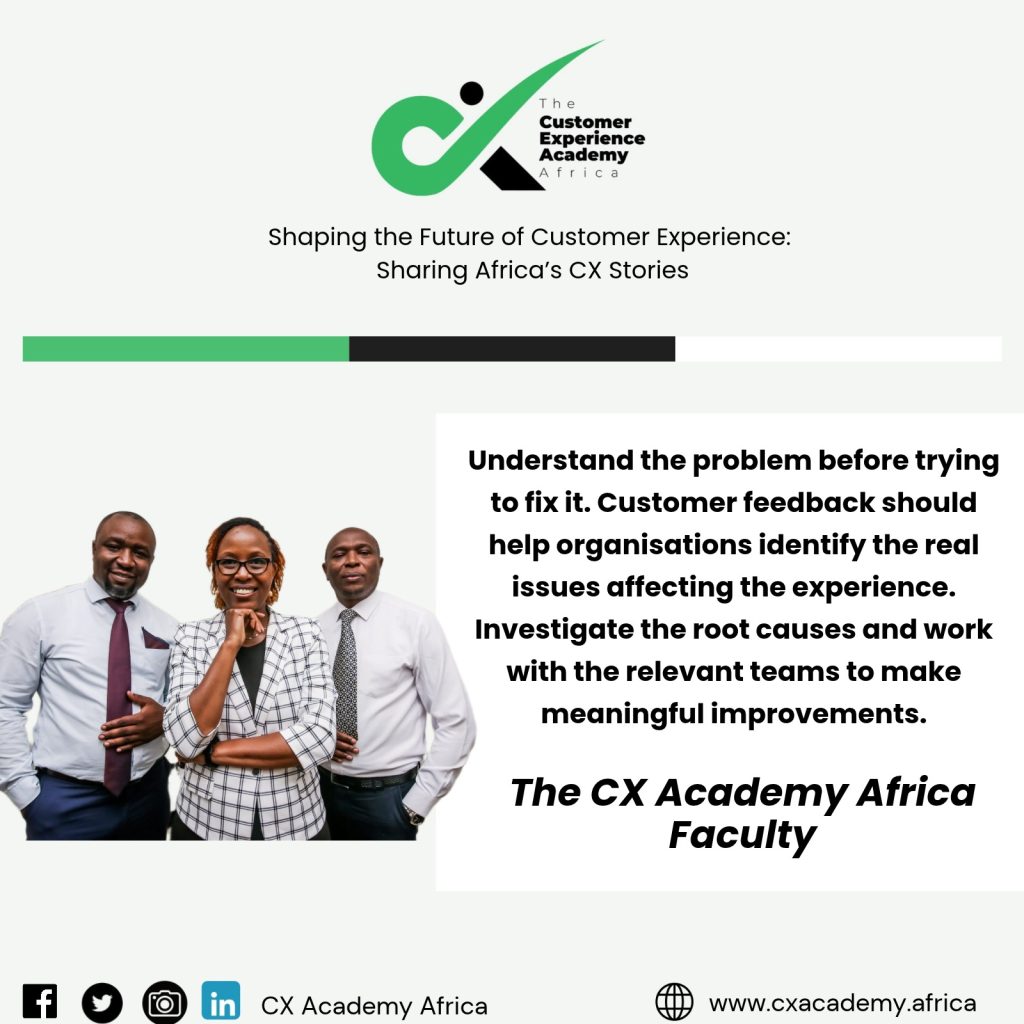
🌟 Understand the problem before trying to fix it. Customer feedback should help organisations identify the real issues affecting the experience. Investigate the root causes and work with the relevant teams to make meaningful improvements.
🌟 Connect customer experience to business results. CX should contribute to outcomes such as customer retention, recommendations, revenue and profitability. Demonstrating this connection helps organisations see customer experience as a business priority.