How can organisations automate customer experiences without compromising trust?
In this week’s World of CX Weekly Breakfast Virtual Conversation, we had an insightful discussion with Timothy Laku on CX Meets Tech, exploring how organisations can use automation and AI while protecting customer trust.
The conversation explored when to automate, when to bring in a human, and why efficiency alone is not enough to build trusted customer experiences.
Here are 10 lessons from the conversation:
🌟 Efficiency is not the same as trust. Improving response times and reducing costs are important, but efficiency alone does not guarantee customer trust.
🌟 Consider customer emotions and business stakes before automating. The decision to automate should consider both the emotional impact on the customer and the potential consequences for the business.
🌟 Automate low-risk, routine interactions. Tasks such as balance enquiries, delivery tracking and password resets can be automated end-to-end where they are straightforward and low-risk.
🌟 Keep humans involved in high-impact decisions. Loan approvals, insurance claims, account freezes and other consequential decisions should not be left entirely to automated systems.
🌟 Make human support easy to access. Customers should not have to struggle to speak to someone. When they request human support, the transition should be quick and seamless.
🌟 Respond to customer emotions. When a customer is frustrated, anxious or distressed, automation should recognise the situation and know when to hand over to a human.
🌟 Set clear guardrails for AI. Organisations need to define what AI can handle, what it should not decide and when human intervention is necessary.
🌟 Measure trust alongside efficiency. Beyond cost, containment rates and average handling time, track repeat contacts, complaints about bots and how quickly customers reach a human when requested.
🌟 Be transparent and protect customer rights. Customers should know when they are interacting with AI, and automated decisions must respect their rights and applicable data protection requirements.
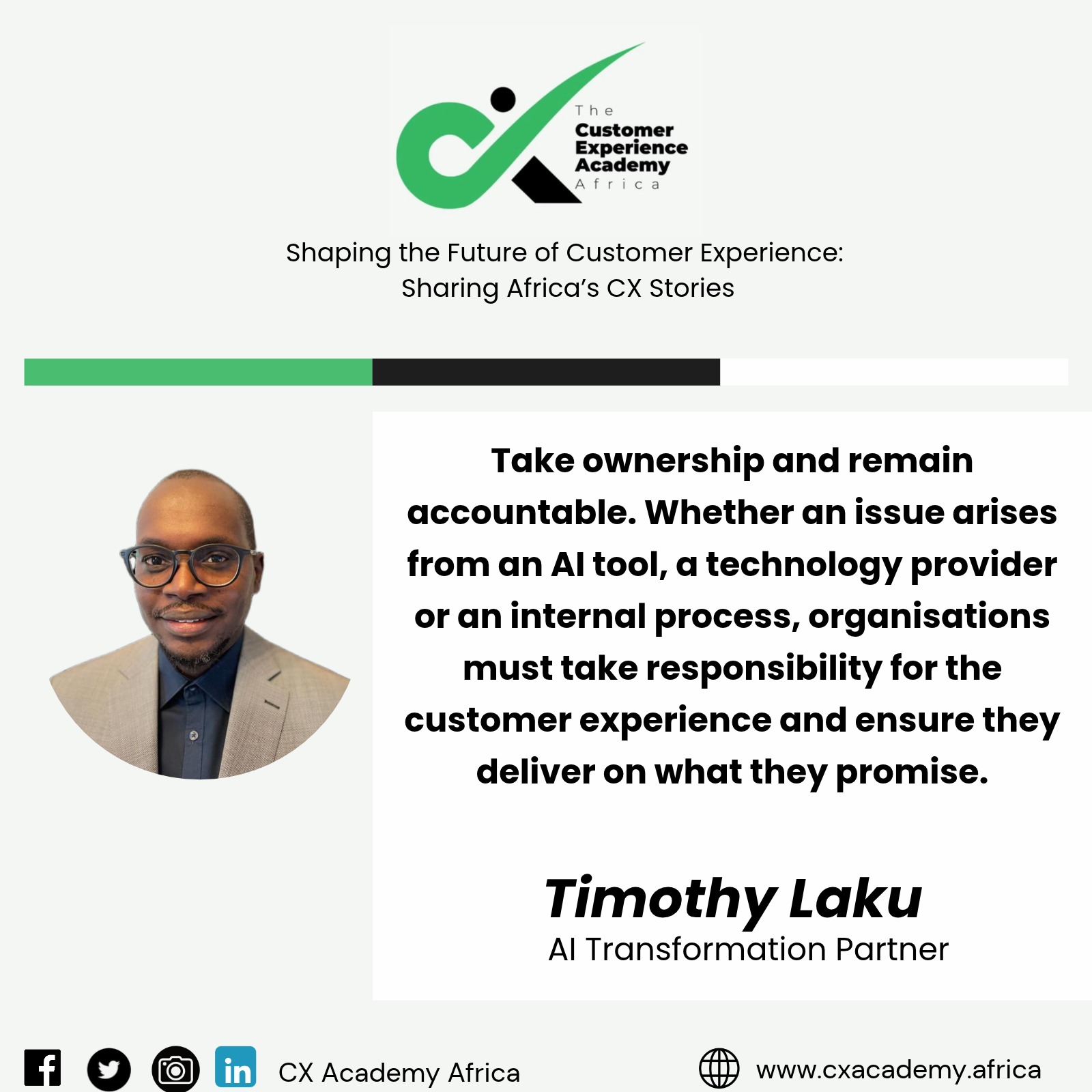
🌟 Take ownership and remain accountable. Whether an issue arises from an AI tool, a technology provider or an internal process, organisations must take responsibility for the customer experience and ensure they deliver on what they promise.