Customer experience is not created by initiatives, dashboards, or strategies on paper. It is shaped by what organizations do with what they already know, how they act on feedback, how leaders respond to insights, and how consistently they close the gap between intention and execution.
In many organizations, there is more data than ever before, more surveys, more KPIs, and more dashboards. Yet the real challenge is no longer collection, it is action, ownership, and follow-through.
Here are 10 lessons drawn from the session:
🌟 Strategy only matters if we constantly pause to ask what is working, what is not working, and what needs to be strengthened or fixed.
🌟 Organizations are collecting more customer and employee feedback than ever before, but the real challenge is turning insights into timely and visible action.
🌟 Having data and dashboards does not automatically improve experience; the value lies in how that data informs decisions.
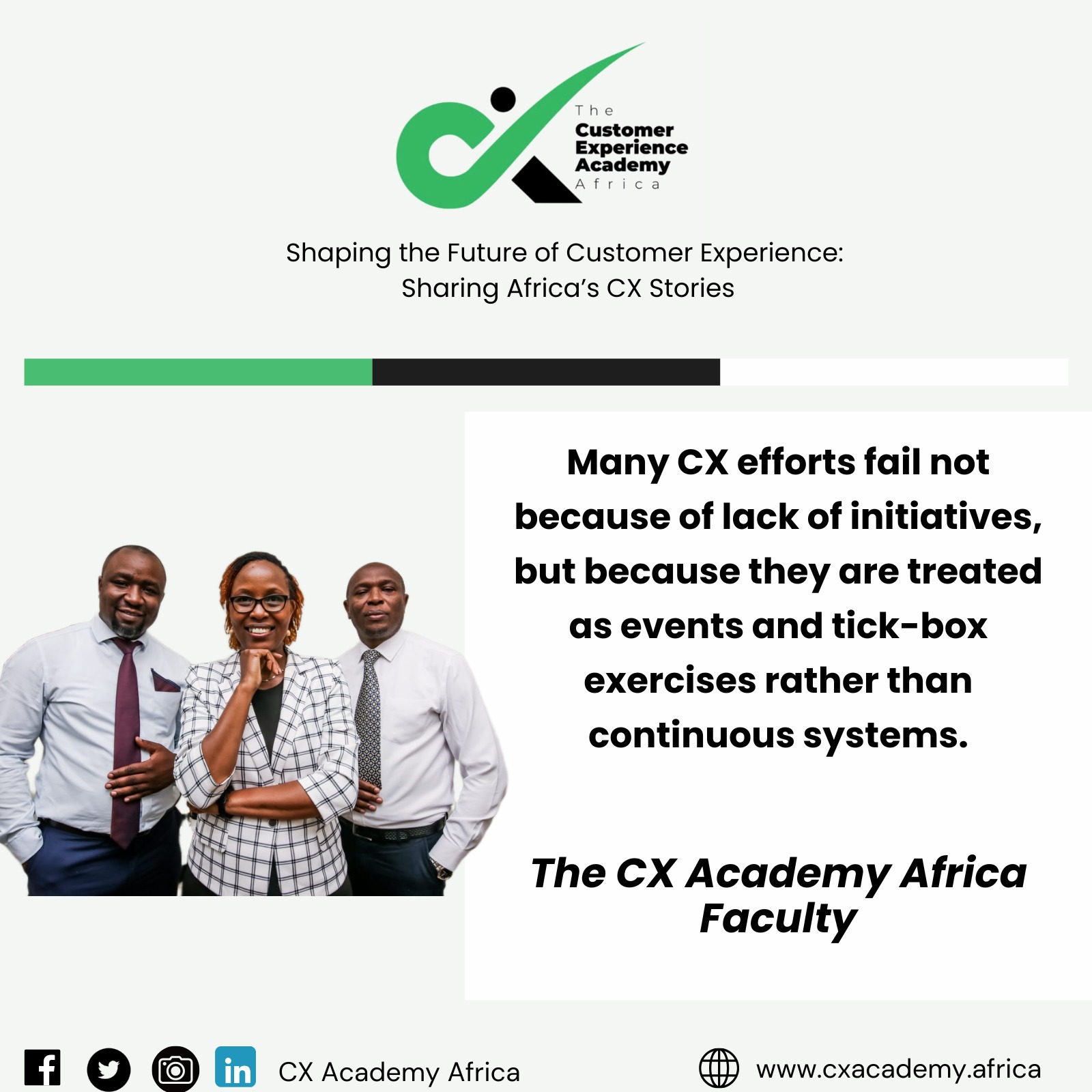
🌟 Many CX efforts fail not because of lack of initiatives, but because they are treated as events and tick-box exercises rather than continuous systems.
🌟 Customer experience improves when leaders actively take ownership, because when everyone owns CX, no one truly owns it.
🌟 There is often a disconnect between customer satisfaction scores and loyalty, showing that satisfaction alone is not a strong enough indicator of experience success.
🌟 Culture and CX often operate in silos, yet both are deeply connected, culture defines how work is done, and CX reflects how that work is experienced externally.
🌟 Values, policies, and customer charters only matter when they are lived in behavior, not just displayed in offices or documents.
🌟 Leadership behavior determines whether employees feel empowered or constrained, and this directly impacts the quality of customer experience delivered.
🌟 The most important question in CX is not what we collected from customers, but what we fixed based on what they told us.